





Patients that have cryopreserved embryos in storage may request to donate these embryos to another infertile couple for the purpose of achieving a pregnancy. In general, patients who choose to donate embryos have had one or more successful live births, and have made the decision not to have any more children themselves. Occasionally, patients will donate embryos despite not having had a successful IVF pregnancy, usually because they become pregnant spontaneously or no longer wish to continue infertility treatment.
Despite other options for disposition of frozen embryos (such as donation to research and discarding of embryos), approximately 5-10% of patients at Reproductive Sciences Center select embryo donation. Many of these patients believe that their embryos deserve a chance of life and they are not comfortable destroying these potential individuals. Still other patients choose this option as a way of helping other infertile patients who may have suffered years of failed IVF attempts, and are no longer in a position to proceed with more expensive treatments such as egg donation and or surrogacy.
The embryo donation program at Reproductive Sciences Center was started several years ago and has achieved outstanding success rates. At this time, a pregnancy rate of > 80% has been achieved. Since many of these patients have failed multiple previous IVF attempts, this level of success is particularly rewarding.
Once a couple or patient decides to donate or accept frozen embryos, they must sign an informed consent form that outlines the procedure and describes in brief the main legal aspects of the donation process. We strongly advise both donating and receiving patient(s) to seek legal advice before participating in the embryo donation program. Once the embryos are thawed and transferred into the receiving patient(s), the donating patient(s) can claim no rights to the embryos, fetus or child(ren).

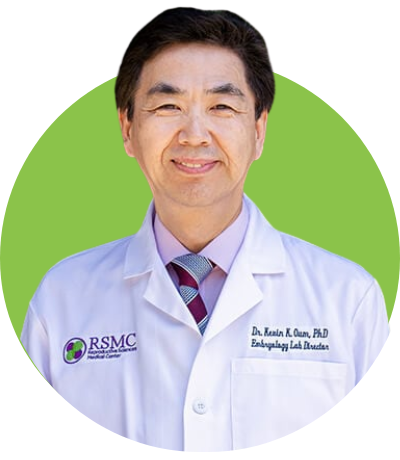
Patients who wish to donate their embryos, specifically those individuals who contributed either the eggs or sperm, must complete a questionnaire that indicates any family history of a genetic disease. In order for a batch of embryos to be accepted by Reproductive Sciences Center, both the egg and sperm donors must pass this screening process. In cases where the eggs or sperm originated from an anonymous donor, such screening will have already been performed by the donor agency prior to the IVF cycle. In addition, re-testing of gamete donors for infectious diseases (e.g. HIV and Hepatitis) is preferable, although in the case of embryos that originated at Reproductive Sciences Center, all egg and sperm donors will have previously undergone state required testing. In order that high pregnancy rates be maintained, embryos that are accepted into the program should be of sufficient quality such that there is a reasonable chance of them surviving the thaw procedure. Assessment of embryo quality will be made by the laboratory director.

Once the embryos have been accepted into the embryo donation program, the donating couple are no longer required to pay storage fees. The donating patient(s) may decide to change their mind, up to the time that the embryos are thawed. However, once the signed and notarized consent is on file in Reproductive Sciences Center records, there is no guarantee that the embryos can be re-claimed. Patients are notified in writing at the time their embryos are accepted into the embryo donation program, however, they are not informed at the time the embryos are thawed, or, if and when a pregnancy is achieved (unless previous arrangements have been made).


In order to match patients with suitable embryos, patients wishing to receive donated embryos are given abbreviated profiles on the egg and sperm donors. The profiles include eye and hair color, ethnic background, height, weight, education and profession. Patients may select a group of embryos from all available batches of embryos on file. Generally each batch of embryos is designated to just one couple. In the event that a pregnancy is achieved, the receiving patient(s) may hold on to the remaining sibling embryos for up to 2 years, providing storage fees are paid. If, after 2 years they have not been used for a subsequent pregnancy, the embryos are returned to the embryo donation program and may be assigned to a different patient(s).
In general Reproductive Sciences Center embryo donation program is based on anonymous donations. In certain cases, information may be exchanged between the donating and receiving patients, usually with the embryo program director as an intermediary. If donating patients have specific requests regarding the receiving couple, such as religious or educational preferences, these must be addressed in writing to the director of the embryo donation program at the time consents are submitted. Reproductive Sciences Center also endorses embryo donation between known couples, often family members. This is referred to as “directed donation”, and in such cases specific screening (e.g. family history) and testing requirements may be wavered.
The embryo donation transfer procedure follows the same regimen that is used for all frozen embryo transfers. Patients undergo several weeks of hormonal treatment to prepare the uterine lining for implantation. The number of embryos to be thawed is decided by the laboratory director after discussion with the patients, and an agreed number of embryos are transferred, either that same day or after a period of culture.